
The Traditional Test Prep Manual: The Good, The Bad, and The Ugly
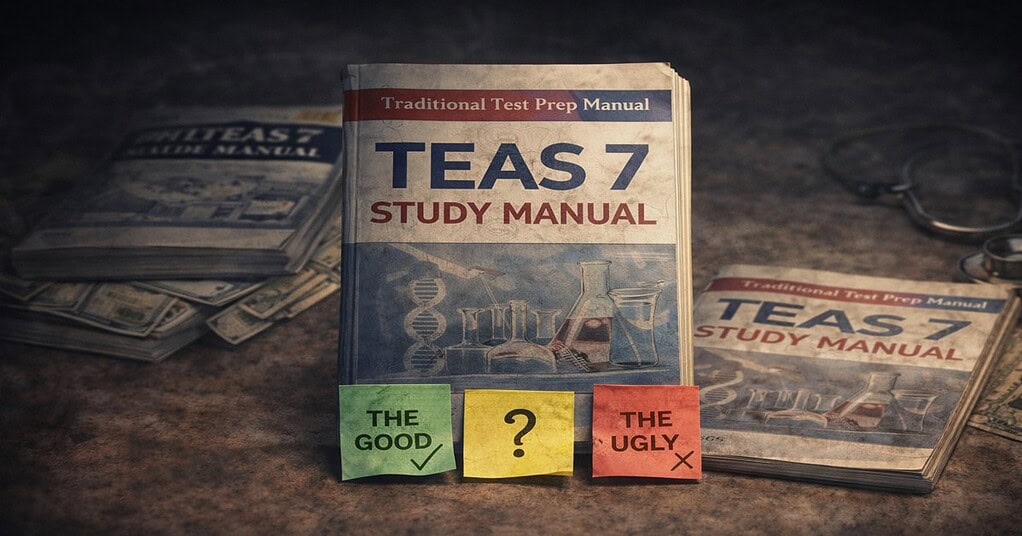
While the traditional TEAS 7 test prep manual is an excellent resource for understanding the exam blueprint, many nursing students find it notoriously shallow in the Science and Reading sections. Because the standard manual reads like an outline rather than a comprehensive textbook, students must supplement it with in-depth visual study guides to truly master complex anatomy, physiology, and chemistry concepts.
It is one of the most common complaints you will see on nursing student forums and Reddit threads: “I bought the traditional prep book, memorized every single page, and still failed the Science section.” It leaves pre-nursing students feeling completely defeated. Why would the most highly recommended study manuals fail to fully prepare you? Let’s validate that frustration right now. If you used the traditional test prep manual and still struggled on test day, you are not alone—and it is not your fault. Here is the candid truth about what the standard book does well, and where it completely falls apart.
The Good: What the Traditional Manual Actually Gets Right
Before we break down the flaws, we have to give credit where it is due. The traditional test prep manual does provide one resource that is undeniably valuable.
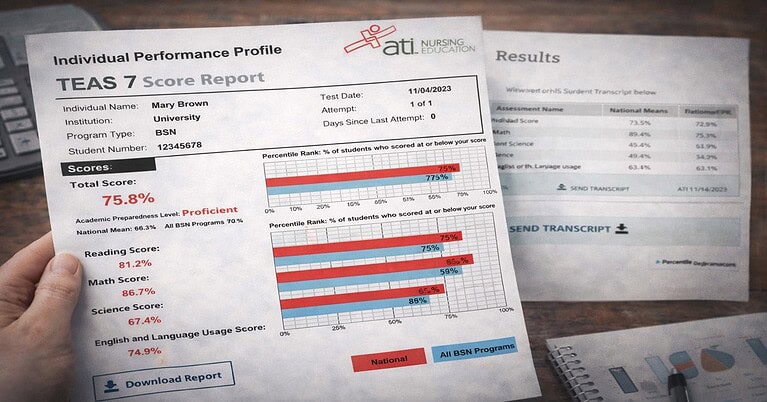
It is fantastic at giving you the absolute baseline blueprint of the exam. It tells you exactly what topics are going to be on the test. Additionally, if you pair it with official online practice assessments, you get a great baseline for predicting your final score and understanding the exact testing environment you will face.
The Bad: The "Shallow Waters" of the Science Section
Here is the massive flaw with the traditional test prep manual: it is essentially just a giant, condensed outline.
The book is great at telling you what to study, but it does a terrible job of actually teaching you those topics. For example, if you do not already have a rock-solid foundation in Anatomy and Physiology, reading two short, highly condensed paragraphs about the cardiovascular system in a traditional manual is not going to help you.
When you sit down for the real exam and get hit with a complex, multi-step application question about blood flow, those shallow paragraphs from the standard manual will leave you completely stranded.
The Ugly: A Complete Lack of Visual Learning
Modern nursing students need modern study materials. Unfortunately, the traditional test prep manual is incredibly dry and heavily text-based.
It completely lacks the systemic flowcharts, color-coded diagrams, and critical-thinking maps that visual learners desperately need to retain complex information. Staring at walls of dense, sterile text is a fast track to study fatigue and burnout. You need to see how the systems connect, not just read a list of facts from a heavy textbook.
The Winning Combination for Test Day
If you want to guarantee your acceptance letter, you need a strategic combination of resources.
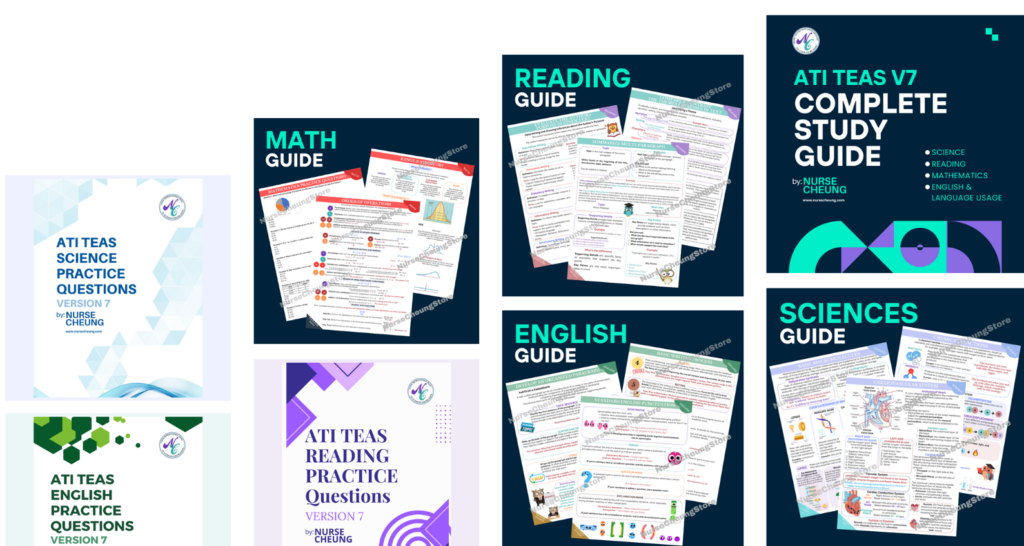
Use your official online practice tests solely for your baseline gauge of readiness. But for the actual learning, studying, and memorization? You need to use the Nurse Cheung Complete Study Guide as your “teacher.” This allows you to visually master the deep-dive concepts that the traditional test prep manual completely glosses over.
If the standard manual left you feeling confused and underprepared, you are not alone. Upgrade your study sessions with the beautifully illustrated, systemic visual breakdowns inside our Complete TEAS 7 Study Guide. There is no fluff—just the deep-dive explanations you need to actually understand the science and crush your exam.