
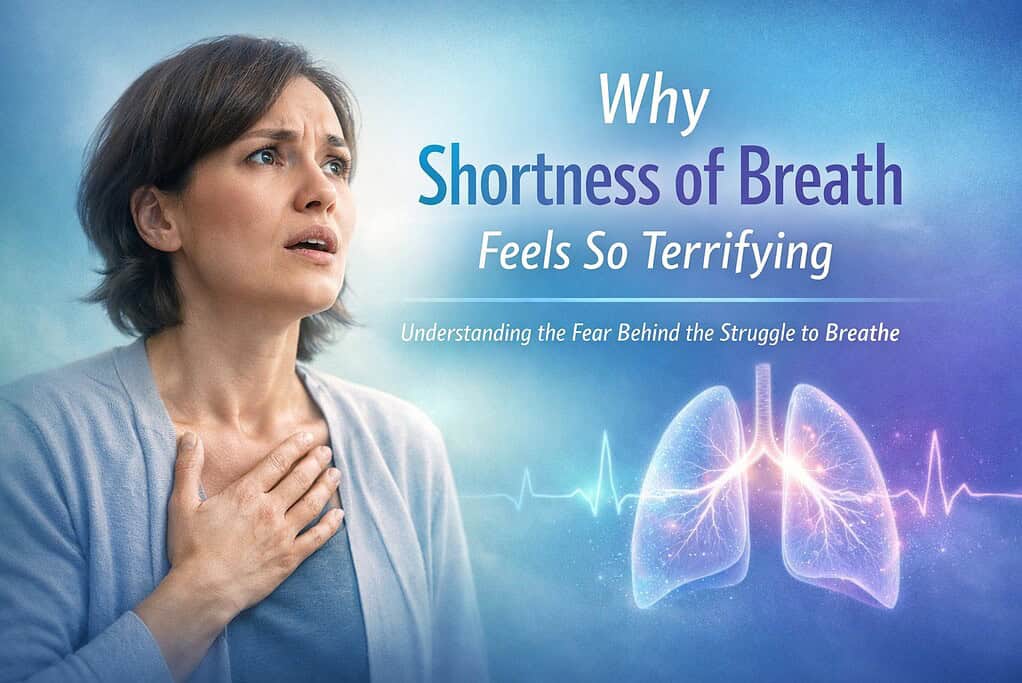

Shortness of breath is one of the most alarming sensations the human body can experience. Even a brief episode can trigger intense fear, panic, and a sense that something is profoundly wrong. People often describe it as feeling like they are suffocating, drowning, or losing control of their own body. Unlike pain, which can sometimes be localized or tolerated, difficulty breathing immediately demands attention. It interrupts thought, focus, and calm in a way few other symptoms can.
This reaction is not a personal weakness or an overreaction. It is deeply rooted in human biology, psychology, and survival instinct. Understanding why shortness of breath feels so terrifying can help reduce panic, improve coping strategies, and encourage appropriate medical evaluation when needed.
In this article, we will explore what shortness of breath really is, why it triggers fear so powerfully, how the brain and body respond, and what this sensation can mean for physical and mental health.
What Is Shortness of Breath?
Shortness of breath, medically known as dyspnea, refers to the subjective feeling of not getting enough air. It does not always correlate with measurable oxygen levels. A person can feel severely short of breath even when their oxygen saturation is normal, while another person with dangerously low oxygen may not feel breathless at all.
Dyspnea can feel different depending on the cause. Some people describe chest tightness, air hunger, or a feeling that breathing takes excessive effort. Others feel as though they cannot take a deep breath, no matter how hard they try. These sensations can occur suddenly or gradually and may worsen with activity, stress, or certain positions.
Importantly, shortness of breath is a symptom, not a diagnosis. It can arise from conditions involving the lungs, heart, blood, muscles, nervous system, or mental health.
Breathing: The One Function You Cannot Pause
Breathing is unique among bodily functions because it is both automatic and consciously controllable. You do not need to think about breathing, yet you can hold your breath or change your breathing pattern at will. This dual control makes breathing deeply tied to our sense of autonomy and survival.
When breathing becomes difficult, the brain interprets it as an immediate threat. Unlike hunger or fatigue, which develop gradually, impaired breathing suggests imminent danger. From an evolutionary perspective, a lack of oxygen meant death within minutes. The human brain evolved to respond to any disruption in breathing with urgency.
This is why shortness of breath often feels more frightening than other symptoms, even when those symptoms may be medically more dangerous.
The Brain’s Alarm System and Air Hunger
The terror associated with shortness of breath originates in the brain’s survival circuitry. Specialized receptors monitor carbon dioxide levels, oxygen levels, and the effort required to breathe. When these sensors detect a problem, they signal the brainstem and limbic system.
The limbic system, which includes the amygdala, is responsible for processing fear. When breathing feels insufficient, the amygdala activates the fight-or-flight response. Adrenaline is released. Heart rate increases. Muscles tense. Thoughts race. The body prepares to survive what it perceives as an immediate threat.
This response is fast and intense by design. Unfortunately, it can create a vicious cycle. Fear causes faster, shallower breathing, which can worsen the sensation of breathlessness. This loop is particularly common in panic attacks and anxiety-related shortness of breath.
Why Shortness of Breath Triggers Panic So Easily
Few sensations evoke panic as quickly as the feeling of suffocation. Breathing is essential for consciousness, and the body knows this instinctively. When airflow feels restricted, the mind often jumps to catastrophic conclusions.
Thoughts such as “I’m going to die,” “I’m having a heart attack,” or “I’m suffocating” are common. These thoughts increase anxiety, which further amplifies physical symptoms. Chest tightness, dizziness, tingling, and rapid heartbeat may follow, reinforcing the fear.
Unlike pain, which people can sometimes mentally compartmentalize, breathing difficulty is impossible to ignore. Every breath becomes a reminder that something feels wrong. This constant feedback keeps the nervous system in a heightened state of alert.
Common Medical Causes of Shortness of Breath
Shortness of breath can result from many medical conditions, some mild and some serious. Understanding the range of causes helps explain why the symptom is so unsettling.
Respiratory causes include asthma, chronic obstructive pulmonary disease (COPD), pneumonia, pulmonary embolism, and infections. These conditions directly affect airflow or gas exchange, making breathing physically more difficult.
Cardiac causes include heart failure, arrhythmias, and coronary artery disease. When the heart cannot pump effectively, fluid may back up into the lungs or tissues may not receive adequate oxygen, triggering breathlessness.
Other causes include anemia, which reduces oxygen-carrying capacity; neuromuscular disorders that weaken breathing muscles; metabolic conditions; and even dehydration or electrolyte imbalances.
Because shortness of breath can signal a wide range of issues, the brain treats it as a high-priority warning sign.
Anxiety, Panic, and the Breath
Shortness of breath is not always caused by a physical disease. Anxiety and panic disorders are among the most common non-medical causes of dyspnea. In these cases, the breathing muscles and lungs are structurally normal, but breathing patterns become dysfunctional.
Anxiety often leads to rapid, shallow breathing or hyperventilation. This lowers carbon dioxide levels in the blood, which paradoxically creates the sensation of air hunger. The person feels like they cannot get enough air, even though oxygen levels are normal or elevated.
This experience feels real and frightening. The brain does not distinguish between psychological and physical threats when it comes to breathing. As a result, anxiety-related shortness of breath can feel just as terrifying as a medical emergency.
Loss of Control and the Fear of Suffocation
One reason shortness of breath is so distressing is the loss of control it creates. Breathing is something people assume will always work. When it doesn’t, even temporarily, that assumption is shattered.
The sensation can make people feel trapped inside their own bodies. They may try to force deep breaths, gasp, or yawn repeatedly. When these efforts fail, fear escalates.
This perceived loss of control is a powerful psychological stressor. Humans tolerate discomfort far better when they believe they can control it. Shortness of breath removes that sense of safety.
Why Even Mild Breathlessness Feels Severe
Interestingly, the intensity of fear does not always match the severity of the underlying condition. Mild airway irritation or temporary anxiety can feel unbearable, while serious conditions may initially produce subtle symptoms.
This mismatch occurs because dyspnea is subjective. It is influenced by emotional state, past experiences, expectations, and sensitivity to bodily sensations. Someone who has previously experienced a traumatic breathing episode may be especially sensitive to any future changes in breathing.
This does not mean the symptom should be dismissed. Any new, unexplained, or worsening shortness of breath should be evaluated by a healthcare professional.
When Shortness of Breath Is a Medical Emergency
While some episodes of breathlessness are benign, others require immediate medical attention. Sudden shortness of breath accompanied by chest pain, fainting, bluish lips or fingertips, confusion, or swelling of the face or throat should be treated as an emergency.
Persistent or worsening breathlessness, especially when it interferes with daily activities or sleep, also warrants prompt evaluation. Listening to your body is not overreacting; it is responsible self-care.
Coping With the Fear in the Moment
When shortness of breath strikes, fear often follows instantly. Learning how to respond calmly can help interrupt the panic cycle. Slow, controlled breathing techniques can signal safety to the nervous system. Focusing on extending the exhale rather than forcing deep inhales can reduce air hunger.
Grounding techniques, such as naming objects in the room or placing your feet firmly on the floor, can also help redirect attention away from catastrophic thoughts. These strategies do not replace medical care, but they can reduce distress while help is being sought.
The Power of Understanding the Sensation
One of the most effective ways to reduce fear is understanding. Knowing that shortness of breath triggers ancient survival mechanisms can help people feel less ashamed or confused by their reactions.
Fear during breathlessness does not mean you are weak. It means your brain is doing exactly what it evolved to do: protect you.
Education empowers patients to describe symptoms more clearly, seek care sooner, and engage in treatment plans with confidence.
Conclusion: Fear Has a Reason, but You Are Not Helpless
Shortness of breath feels terrifying because it threatens the most fundamental requirement for life: oxygen. The brain responds instantly and powerfully, often before logic has a chance to intervene. This reaction is normal, human, and rooted in survival biology.
Understanding why this sensation is so frightening does not make it disappear, but it can reduce the panic surrounding it. With knowledge, appropriate medical evaluation, and coping strategies, people can regain a sense of control and safety.
Breathing may be automatic, but caring for your breath is intentional. When something feels wrong, your fear is not the enemy; it is a signal asking you to pay attention, seek support, and take care of yourself.
If this article helped you better understand shortness of breath, consider sharing it with others. Knowledge saves time, reduces fear, and sometimes even saves lives.