


Most people don’t ignore warning lights in their car. When the oil light flashes or the engine starts making an unfamiliar noise, we take action—because we know what happens if we don’t.
But when it comes to our health, many of us do the opposite.
We skip routine checkups. We postpone screenings. We avoid preventive care because we feel “fine,” because life is busy, or because we assume care will be expensive or unnecessary. Unfortunately, this reactive approach to health is one of the biggest reasons chronic disease, preventable complications, and skyrocketing healthcare costs continue to rise.
Preventive care is not about living in fear of illness. It’s about catching problems early, preventing disease before it starts, and avoiding the physical, emotional, and financial toll that comes with late-stage treatment. When used consistently and correctly, preventive care saves lives—and often saves money in the process.
This article breaks down what preventive care really is, how it works, why it’s so powerful, and why skipping it is far more costly than most people realize.
What Preventive Care Actually Means (and What It Doesn’t)
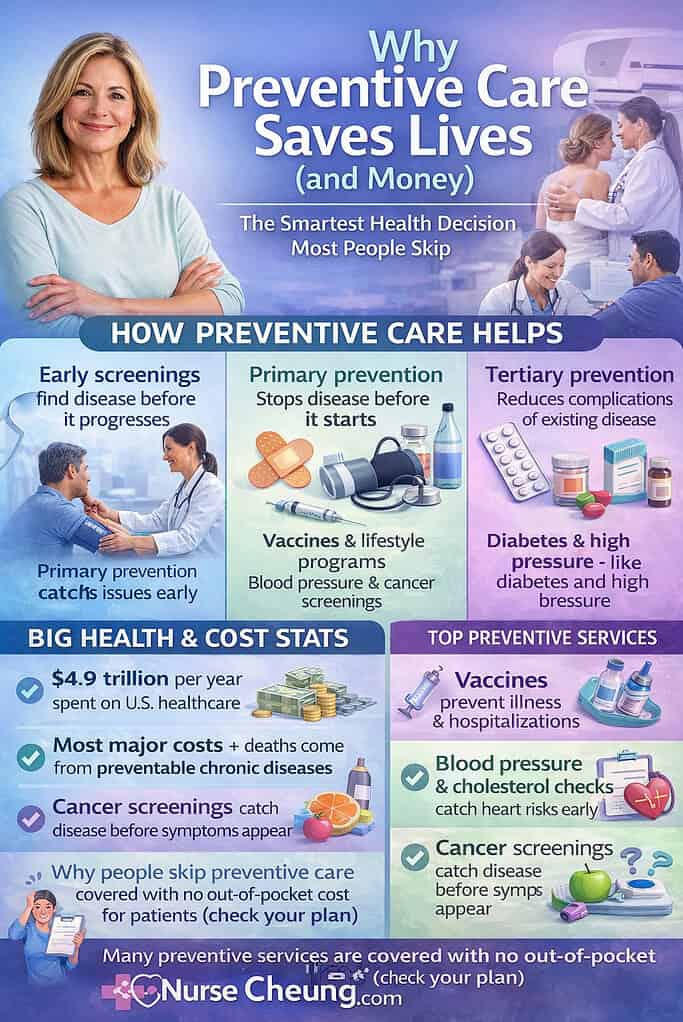
Preventive care refers to healthcare services designed to prevent illness, detect conditions early, or reduce complications before they become severe. It includes things like routine physical exams, blood pressure checks, cholesterol screening, cancer screenings, vaccinations, and evidence-based lifestyle programs.
What preventive care does not mean is unnecessary testing or constant medical visits without reason. It’s not about overmedicalizing your life. It’s about using science-backed interventions at the right time, for the right people, to reduce risk and improve long-term outcomes.
There are three main levels of prevention:
Primary prevention aims to stop disease before it starts. This includes vaccines, smoking cessation programs, and nutrition or physical activity interventions.
Secondary prevention focuses on early detection through screenings—finding disease before symptoms appear, when treatment is simpler and outcomes are better.
Tertiary prevention works to prevent complications once a disease already exists, such as managing diabetes to prevent kidney failure or vision loss.
Many people assume preventive care is only for those who feel unwell. In reality, it is most effective for people who feel healthy—because that is when disease is easiest to stop.
How Preventive Care Saves Lives: The Power of Early Action
Many of the most dangerous health conditions develop quietly. High blood pressure often has no symptoms until it causes a stroke or heart attack. Type 2 diabetes can progress for years before it damages nerves, kidneys, or vision. Certain cancers grow silently until they reach advanced stages.
Preventive care changes this timeline.
Routine screenings catch problems when they are smaller, slower, and far easier to treat. Early detection often means fewer invasive procedures, shorter recovery times, lower complication rates, and significantly higher survival rates.
Consider blood pressure screening. A simple cuff measurement during a routine visit can identify hypertension long before it causes irreversible damage. When caught early, blood pressure can often be controlled with lifestyle changes or low-dose medication, dramatically reducing the risk of heart disease and stroke.
Cancer screenings offer another powerful example. Detecting colorectal, cervical, breast, or prostate cancer at an early stage frequently leads to simpler treatments and much better outcomes. In many cases, early-stage cancers are highly treatable—or even curable.
Preventive care works because it aligns healthcare with how disease actually develops. It intervenes early, before illness becomes crisis.
The Cost Myth: Does Preventive Care Really Save Money?
One of the most common misconceptions about preventive care is that it is an unnecessary expense. Some people believe that skipping routine care saves money because they avoid doctor visits or testing.
In reality, preventive care shifts costs earlier—but dramatically reduces far larger costs later.
Not all preventive services are immediately cost-saving, and it’s important to be honest about that. Some interventions cost money upfront but provide substantial health benefits relative to their cost. This is known as cost-effectiveness. In healthcare economics, cost-effective care is considered a wise investment because it delivers meaningful improvements in health outcomes without excessive spending.
Many preventive measures, however, do directly save money. Vaccinations, for example, prevent costly hospitalizations, emergency care, long-term disability, and lost productivity. Blood pressure and diabetes prevention programs reduce expensive complications like heart attacks, kidney failure, amputations, and vision loss.
Compare the cost of a routine screening to the cost of hospitalization, surgery, lifelong medication, or disability care. Preventive care is rarely the expensive option—it just happens earlier.
The Biggest Money-Savers in Preventive Healthcare
Certain preventive services consistently show strong returns, both medically and financially.
Vaccinations are among the most effective public health tools ever developed. They prevent millions of illnesses and deaths every year while reducing healthcare utilization and missed workdays.
Blood pressure and cholesterol screening help prevent heart disease, the leading cause of death in many countries. Treating cardiovascular disease after it develops is vastly more expensive than preventing it.
Diabetes prevention programs, particularly lifestyle-based interventions, significantly reduce the risk of developing type 2 diabetes. Preventing diabetes avoids decades of medication costs, frequent medical visits, and severe complications.
Cancer screenings reduce mortality and often lower treatment costs by catching disease earlier, when care is less intensive and outcomes are better.
Each of these interventions represents a small, proactive investment that prevents large downstream costs.
Why So Many People Still Skip Preventive Care
If preventive care is so effective, why do so many people avoid it?
One reason is time. Preventive care doesn’t feel urgent, and it’s easy to postpone when life is busy.
Another reason is fear. Some people avoid screenings because they are afraid of what might be found. Unfortunately, avoiding information doesn’t prevent disease—it only delays diagnosis.
Cost confusion also plays a major role. Many people don’t realize that a wide range of preventive services are covered by insurance plans without out-of-pocket costs when using in-network providers. Others assume care will be expensive and avoid it entirely.
There is also a cultural tendency to view healthcare as something you use only when you are sick. Preventive care challenges that mindset by emphasizing long-term planning rather than short-term reaction.
The reality is simple: avoiding preventive care does not avoid disease. It only postpones the consequences—and often increases them.
Preventive Care as a Life Strategy, Not a Doctor’s Order
Preventive care is not just a medical recommendation; it’s a life strategy.
It is about protecting your future health, independence, and quality of life. It is about maintaining the ability to work, care for loved ones, travel, and live fully as you age. It is about minimizing the chance that a preventable condition becomes a life-altering event.
Seen this way, preventive care becomes empowering rather than burdensome. It puts control back into the hands of individuals instead of leaving health outcomes to chance.
Small actions—routine screenings, vaccinations, lifestyle changes—compound over time. They reduce uncertainty, increase resilience, and provide peace of mind that no emergency room visit can offer.
Conclusion: The Smartest Health Decision You Can Make
Preventive care does not generate dramatic headlines or immediate gratification. Its power lies in what doesn’t happen—strokes that never occur, cancers caught early, complications avoided, hospital stays prevented.
By addressing health risks early, preventive care saves lives, reduces suffering, and often prevents enormous financial costs. It shifts healthcare from crisis management to long-term well-being.
The most expensive healthcare decision is waiting.
If you have been delaying a screening, skipping routine care, or assuming preventive services are unnecessary, now is the time to reconsider. Review what services your insurance covers, schedule one preventive appointment you’ve been putting off, and take a proactive step toward protecting your future health.
Prevention doesn’t feel urgent—but it is powerful. And it may be the smartest investment you ever make.