
The Hardest Sections on the TEAS 7 (Based on Data from 1,000+ Students)
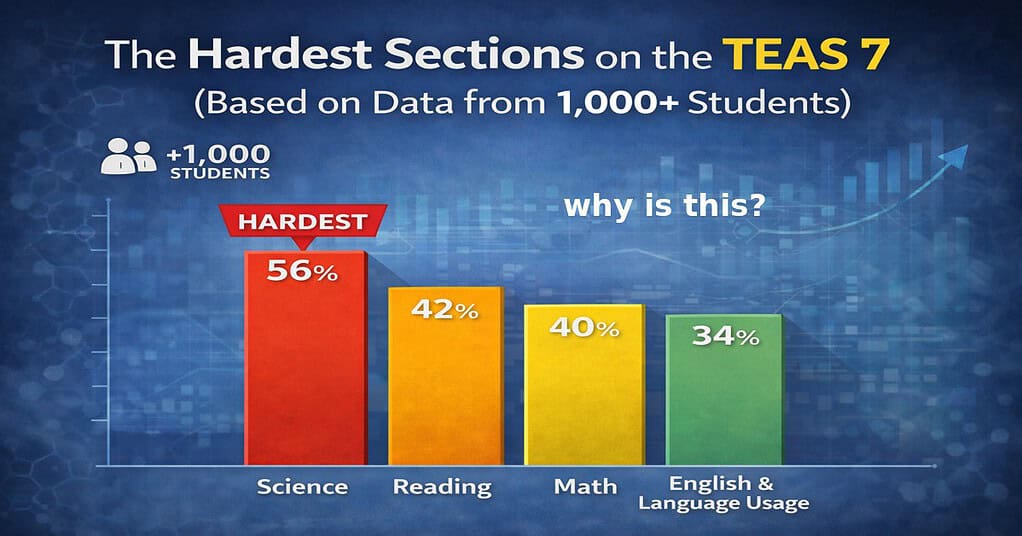
The Data Is In: What Actually Fails Students Based on data from over 1,000 nursing students, the Science section is consistently ranked as the hardest section on the ATI TEAS 7 due to its heavy emphasis on systemic application, chemistry, and biology. The Reading and English sections are ranked as the second hardest, primarily due […]
The TEAS 7 Science Ambush: Chemistry and Biology Topics You MUST Know
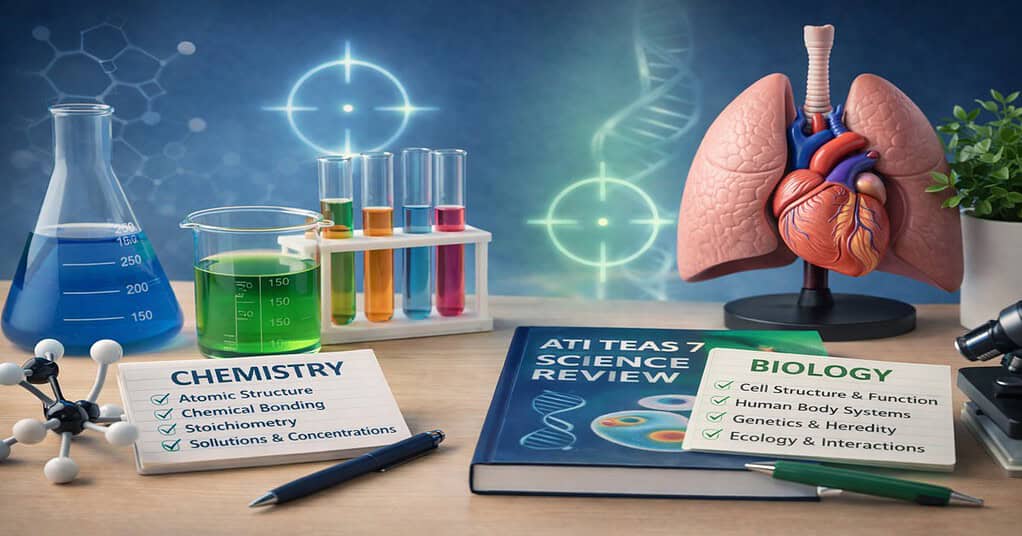
You spent the last eight weeks meticulously memorizing every single bone in the human body. You can perfectly trace the exact drop of blood as it travels through the heart’s chambers and valves. You sit down at the testing center, confidently open the TEAS 7 Science section… and the very first question asks you to […]
The ATI TEAS 7 Quizlet Trap: Why Free Flashcards Are Ruining Your Score
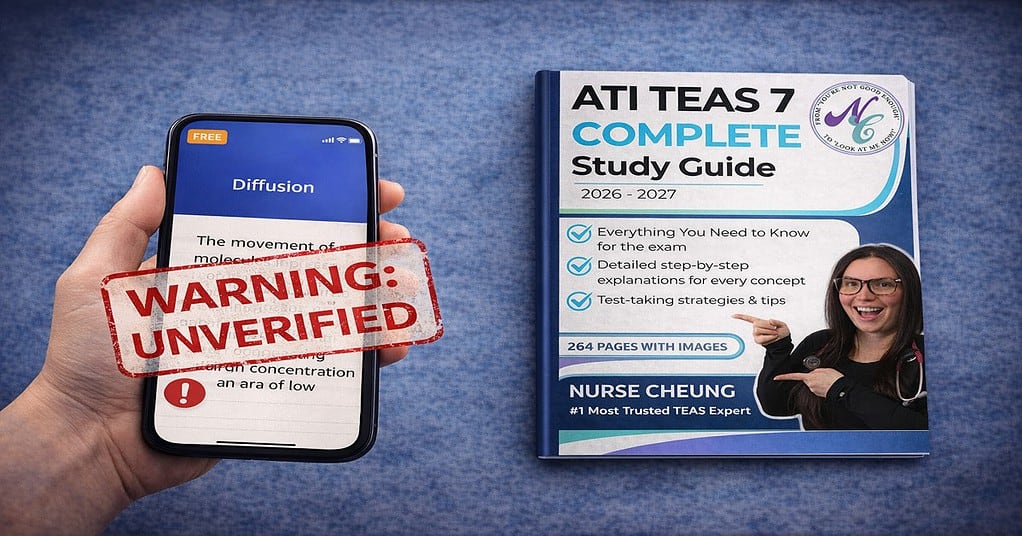
The Free Resource Trap The ATI TEAS 7 Science section tests critical thinking and systemic application, not just rote memorization. Using flashcards to memorize anatomical vocabulary is one of the worst study methods because it isolates information. To pass the TEAS, you must understand how different bodily systems interact and respond to physiological stress, which […]
Why Flashcards Will Make You Fail TEAS 7 Science (Application vs. Recall)
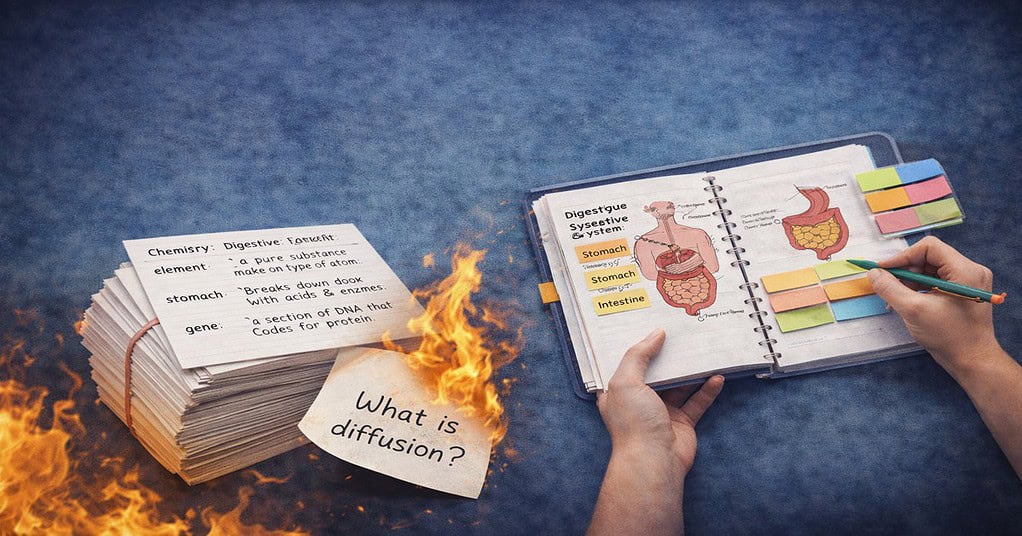
The Illusion of Competence The ATI TEAS 7 Science section tests critical thinking and systemic application, not just rote memorization. Using flashcards to memorize anatomical vocabulary is one of the worst study methods because it isolates information. To pass the TEAS, you must understand how different bodily systems interact and respond to physiological stress, which […]
The TEAS 7 Calculator Trap: Nurse Cheung’s Mental Math Hacks

How the Built-In Calculator is Stealing Your Time The ATI TEAS 7 provides a built-in, drop-down screen calculator, but relying on it for every question will cause you to run out of time on the Math section. The on-screen calculator is clunky and covers part of the exam window. To beat the 57-minute clock, you […]
How to Answer TEAS 7 Alternate Item Types (SATA, Hot Spot, Timelines)
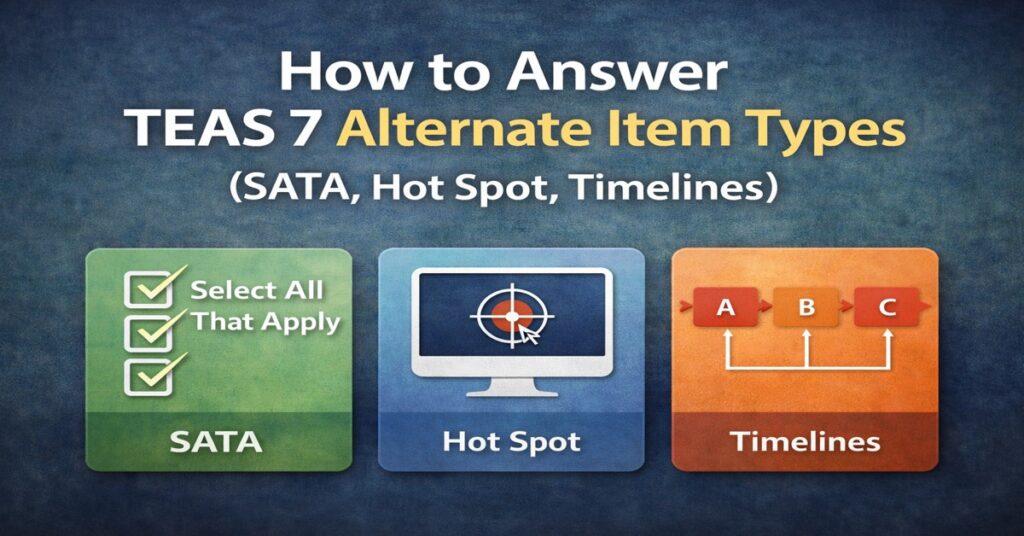
Conquering TEAS 7 Alternate Item Types The ATI TEAS 7 includes Alternate Item Types such as Select All That Apply (SATA), Hot Spots, Ordered Responses, and Fill-in-the-Blank questions, which can make up to 15% of your total exam. Because ATI does not offer partial credit for these questions, you must use specific strategies to answer […]
How Many Questions are on the ATI TEAS 7? (Full Subject Breakdown)
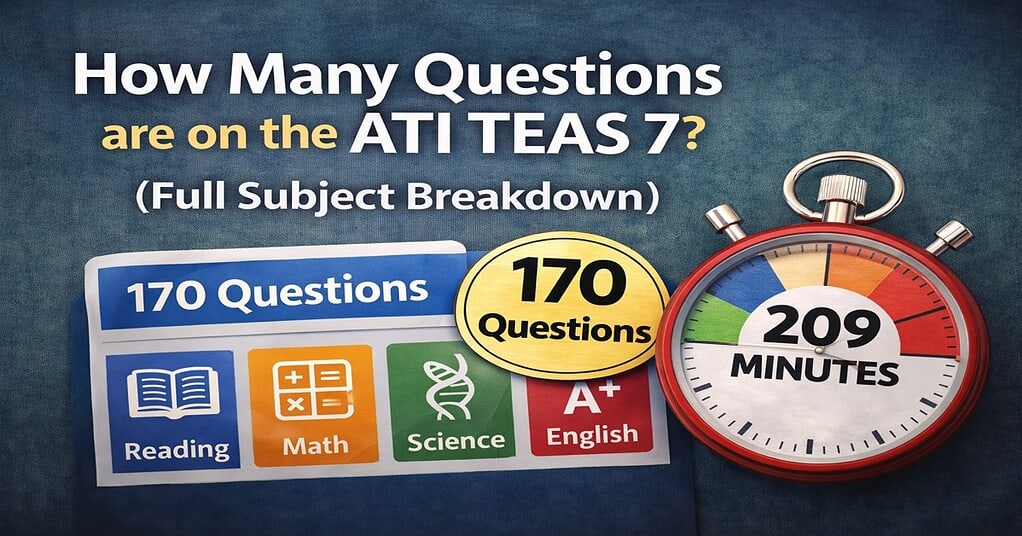
The ATI TEAS 7 Exam Structure and Time Limits The ATI TEAS 7 consists of 170 total questions to be completed in 209 minutes. The exam is broken down into four sections: Reading (45 questions, 55 minutes), Math (38 questions, 57 minutes), Science (50 questions, 60 minutes), and English & Language Usage (37 questions, 37 […]
I’ve Taught Nursing Students for 14 Years: Here is Why They Fail the TEAS 7

The Real Reasons Students Struggle with the ATI TEAS After teaching nursing students for over 14 years, the most common reasons students fail the ATI TEAS 7 are severe test anxiety, poor time management, and relying on rote memorization instead of conceptual application. To pass the TEAS, students must shift from passive reading to practicing […]