

The Data Is In: What Actually Fails Students
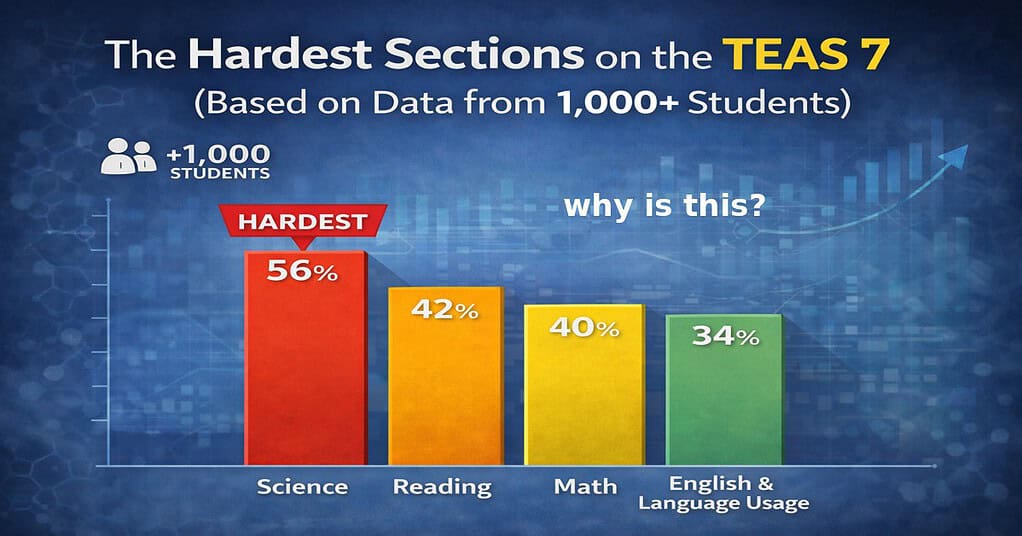
Based on data from over 1,000 nursing students, the Science section is consistently ranked as the hardest section on the ATI TEAS 7 due to its heavy emphasis on systemic application, chemistry, and biology. The Reading and English sections are ranked as the second hardest, primarily due to extreme time constraints and complex, obscure vocabulary context clues.
We recently asked our massive community of future nurses a very simple question: What section of the TEAS 7 made you want to cry the most? When you are studying in a silo, every missed practice question feels like a personal failure. But when we compiled the survey data from over 1,000 students, clear, undeniable patterns emerged. The results are a massive wake-up call for anyone just starting their study journey. You are not alone in your struggles, but you must know exactly where the landmines are hidden before test day.
Here is exactly how the 1,000+ students ranked the exam, and how you can avoid the traps they fell into.
#1 The Undisputed Heavyweight: Science
It is not a surprise, but the data confirms it: Science is the absolute hardest section of the TEAS 7.
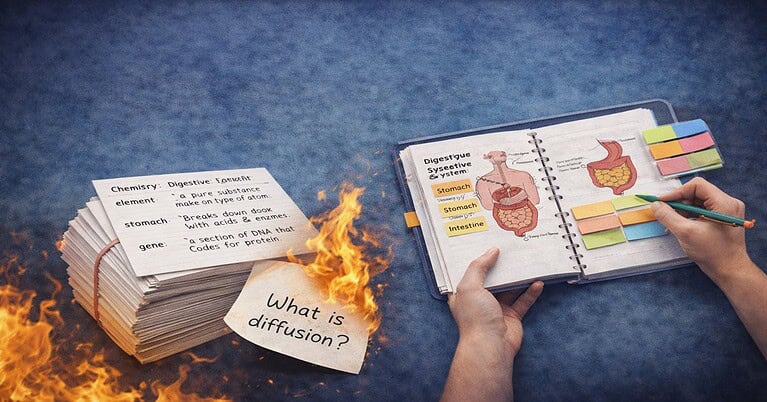
Why does this section single-handedly destroy so many passing scores? Because it completely abandons the concept of “rote memorization.” You cannot just memorize flashcards and expect to pass. The TEAS 7 demands systemic application. It does not just ask you to identify a part of the respiratory system; it asks you to predict how a failure in the respiratory system will directly impact the cardiovascular system.
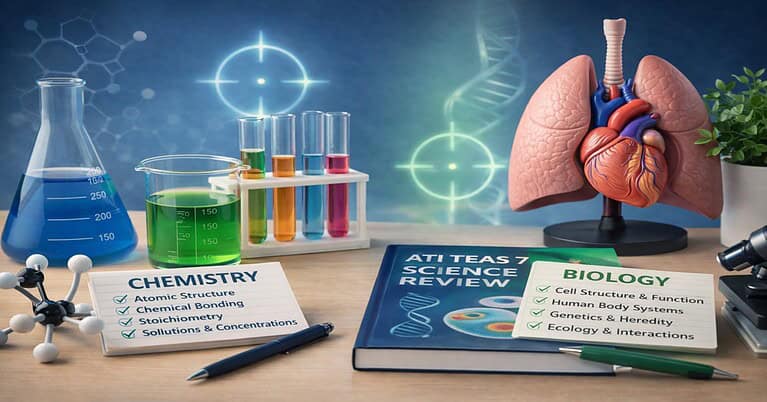
Furthermore, it relies heavily on the “Science Ambush.” Students spend three months comfortably studying Anatomy and Physiology, only to open the exam and get hit with a barrage of questions regarding covalent bonds, macromolecules, and Punnett squares. If you ignore Chemistry and cellular Biology, this section will take you down.
#2 The Silent Killer: Reading & English
This is the section that catches the most students completely off guard. The common mindset is, “I speak English natively and I know how to read, so I will just focus my study time on Science.” This is a fatal error. Reading and English ranked securely in second place for difficulty because it is an absolute pacing nightmare. You have roughly one minute per question to read a dense, five-paragraph essay, identify the author’s logical fallacy, distinguish between complex facts and opinions, and decipher the meaning of an obscure vocabulary word using only context clues.
It is not just testing your reading comprehension; it is actively testing your mental stamina and your ability to filter out intentionally distracting information under extreme time constraints.
#3 The Surprise: Math
Math anxiety is incredibly common in the pre-nursing community, so you would expect this section to be ranked as the most difficult. Surprisingly, it ranked third.
Why? Because the actual mathematics tested on the TEAS 7 are mostly foundational. You are not doing advanced calculus; you are working with fractions, decimals, percentages, and basic algebra.
The students surveyed noted that the true difficulty of the Math section isn’t the math itself—it is the environment. You are forced to use a clunky, on-screen drop-down calculator while the clock is ticking down. If you do not practice translating word problems into basic algebraic equations before test day, the clock will run out before you finish the section.
The Strategic Attack Plan
Now that you have the data and you know exactly where the landmines are, how do you adjust your study schedule?
You must prioritize your weakest subject first. Human nature dictates that we like to study what we are already good at because getting practice questions right releases dopamine. Stop doing that. If you are terrible at Chemistry, you need to attack Chemistry on Day 1. If you are a slow reader, you need to practice timed reading drills every single day. Do not hide in your comfort zone.
Stop Guessing, Start Passing
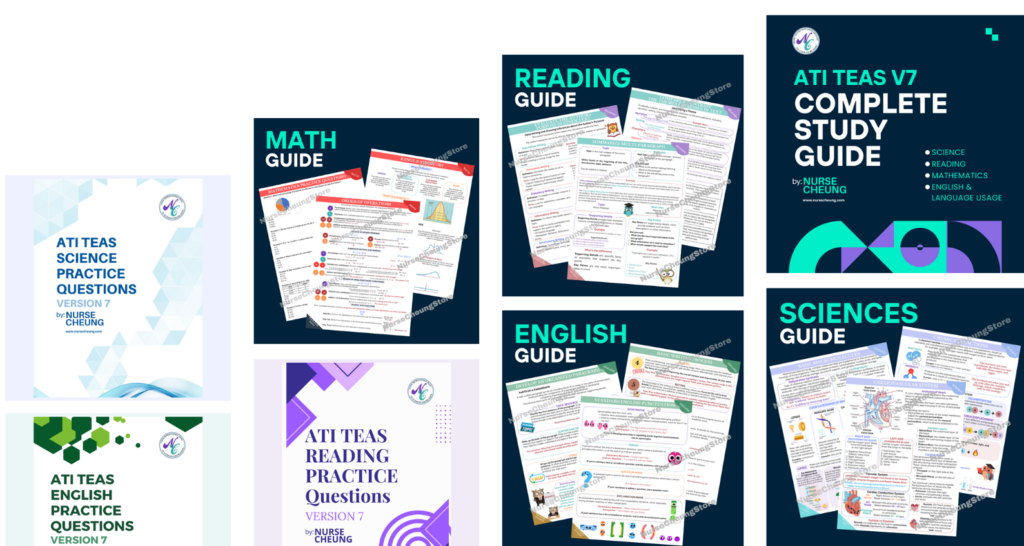
Don’t let the Science and Reading sections destroy your nursing school dreams. Attack the hardest parts of the exam with the proven, visual frameworks inside our Complete TEAS 7 Study Guide. We break down the exact chemistry concepts and reading strategies that trip up the majority of test-takers.
And when you pass the TEAS and are ready to conquer the hardest parts of nursing school—like Pharmacology and Fundamentals—join our 6-Week Mastermind so you already know how to think like a nurse on your very first day of clinicals.