
Osteoporosis doesn’t announce itself with pain, fever, or obvious warning signs. It doesn’t demand attention the way a heart attack or stroke does. Instead, it works quietly, reshaping the skeleton over years—sometimes decades—until one ordinary moment changes everything. A small slip. A missed step. A fall that “shouldn’t have been a big deal.” And suddenly, there’s a fracture.
For millions of people, osteoporosis is discovered not in a doctor’s office, but in an emergency room.
This is what makes osteoporosis so dangerous—and so misunderstood. It’s common, serious, and often invisible until real damage has already occurred. The good news is that osteoporosis is not inevitable, untreatable, or hopeless. With awareness, early detection, and the right strategies, bone loss can be slowed, fractures can be prevented, and quality of life can be preserved.
This article breaks down what osteoporosis really is, why it matters, who’s at risk, and—most importantly—what you can do to protect your bones before they break.
What Is Osteoporosis? Understanding Bone Loss Beneath the Surface
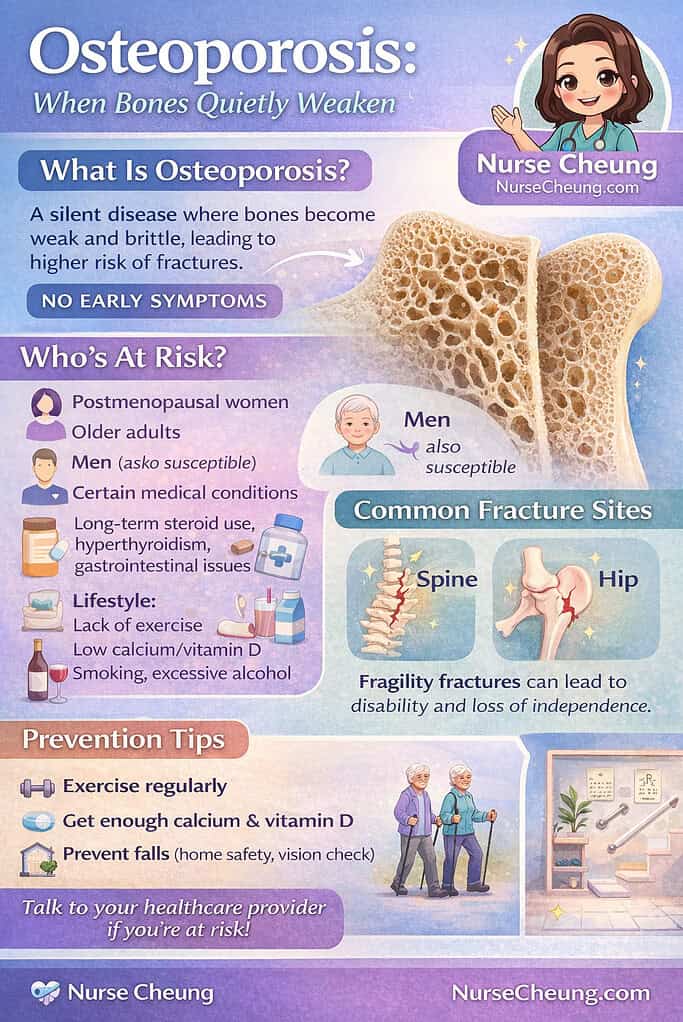
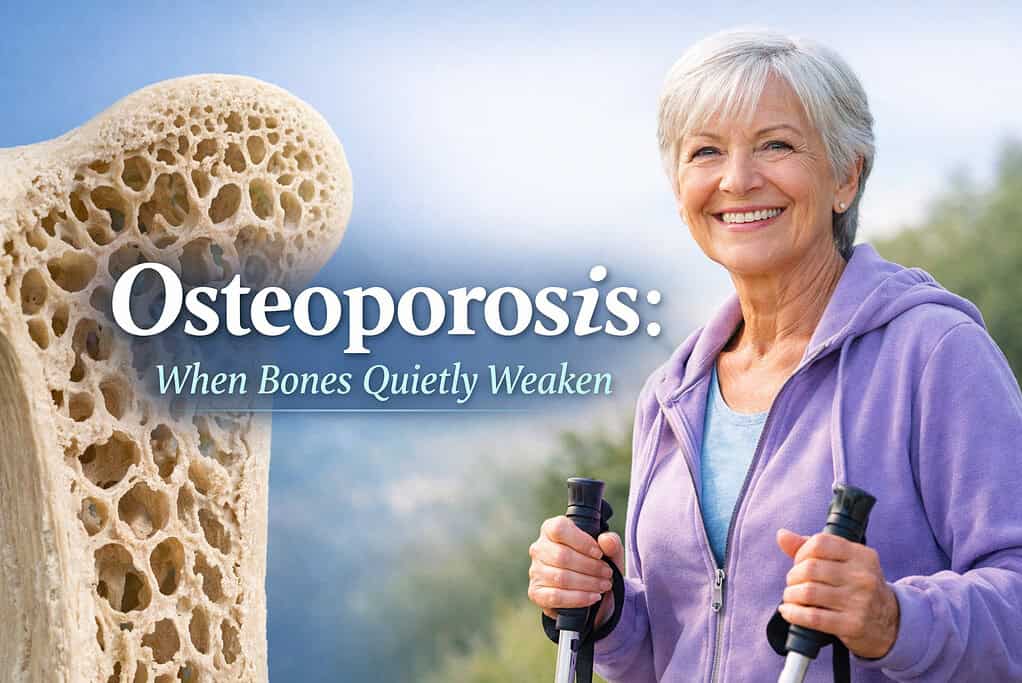
Osteoporosis is a condition in which bones become weak, porous, and more likely to fracture. The word itself literally means “porous bone.” To understand how this happens, it helps to know one important fact: bone is living tissue.
Your bones are constantly remodeling. Old bone is broken down, and new bone is built in its place. In childhood and early adulthood, bone formation outpaces bone breakdown, allowing us to reach peak bone mass—usually by our late 20s or early 30s. After that point, the balance slowly shifts.
In osteoporosis, bone breakdown happens faster than bone formation. Over time, bones lose density and structural integrity. They may look solid from the outside, but internally they develop tiny holes, much like a sponge. This makes them fragile and less able to withstand everyday stress.
Often, osteoporosis develops silently. There are no early symptoms. No aches. No warning signs. This is why many people don’t realize they have osteoporosis until they experience a fracture.
You may also hear the term osteopenia, which refers to lower-than-normal bone density that isn’t severe enough to be classified as osteoporosis. Osteopenia can be thought of as a warning stage—an opportunity to intervene before more serious bone loss occurs.
Why Osteoporosis Is So Dangerous: The Hidden Consequences
The danger of osteoporosis isn’t the bone loss itself—it’s the fractures that follow.
Osteoporosis-related fractures most commonly occur in the hip, spine, and wrist. These are known as fragility fractures, meaning they result from low-impact events, such as a fall from standing height or even minor trauma.
Hip fractures are particularly devastating. Many people never fully regain their previous level of independence after a hip fracture. Recovery often involves surgery, prolonged rehabilitation, and assistance with daily activities. In older adults, hip fractures are also associated with increased mortality within the first year.
Spinal fractures, or vertebral compression fractures, can be just as serious. They may cause chronic pain, loss of height, spinal curvature, and reduced lung capacity. Some spinal fractures happen gradually and may go unnoticed, slowly changing posture and mobility over time.
Beyond the physical consequences, fractures often trigger a cascade of emotional and psychological effects: fear of falling, reduced activity, social isolation, and loss of confidence. What begins as a bone condition can quietly reshape someone’s entire life.
Who Is Most at Risk? (And Why It’s Not Just Older Women)
Osteoporosis is often thought of as a condition that affects only elderly women. While postmenopausal women are at high risk, this narrow view leaves many people undiagnosed and untreated.
Age and Hormonal Changes
As we age, bone remodeling naturally becomes less efficient. In women, estrogen plays a key role in protecting bone. After menopause, estrogen levels drop sharply, accelerating bone loss. This is why women experience a rapid decline in bone density in the years following menopause.
Men and Osteoporosis
Men develop osteoporosis too—often later in life and frequently without being screened. Because osteoporosis is less commonly associated with men, diagnosis may be delayed until after a fracture occurs. Men also tend to have worse outcomes after hip fractures, making early recognition especially important.
Lifestyle Factors
Physical inactivity, smoking, excessive alcohol use, and poor nutrition all contribute to bone loss. Bones respond to stress. When they aren’t challenged through movement and resistance, they weaken.
Medical Conditions and Medications
Certain conditions increase the risk of osteoporosis, including thyroid disorders, gastrointestinal diseases that affect nutrient absorption, and autoimmune conditions. Long-term use of corticosteroids (such as prednisone) is a major risk factor and one of the most common causes of secondary osteoporosis.
Family History and Genetics
If osteoporosis or fractures run in your family, your risk may be higher. Genetics influence peak bone mass and how quickly bone is lost over time.
How Osteoporosis Is Diagnosed: Catching Bone Loss Early
Because osteoporosis is silent, screening is critical.
The most common diagnostic tool is a bone density test, often called a DEXA scan. This painless, low-radiation test measures bone mineral density, usually at the hip and spine. Results are reported as a T-score, which compares your bone density to that of a healthy young adult.
Screening is generally recommended for:
Women aged 65 and older
Postmenopausal women under 65 with risk factors for osteoporosis
For others—especially men or individuals with medical risk factors—screening decisions are often made based on individual risk assessments.
Importantly, bone density is only part of the picture. Fracture risk also depends on age, prior fractures, medications, fall risk, and overall health. This is why early conversations with a healthcare provider are so valuable. Osteoporosis is far easier to manage before a fracture occurs.
Prevention Starts Early: Protecting Your Bones Before They Break
One of the most empowering truths about osteoporosis is this: bone health is not entirely out of your control.
Move Your Body
Weight-bearing and resistance exercises stimulate bone formation. Walking, strength training, climbing stairs, and balance exercises all help maintain bone strength and reduce fall risk. Even later in life, bones respond positively to movement.
Nourish Your Bones
Calcium, vitamin D, and protein are essential for bone health. Calcium provides the building blocks for bone, vitamin D helps with calcium absorption, and protein supports bone structure and muscle strength. Nutrition doesn’t need to be perfect—but it does need to be intentional.
Prevent Falls
Since many fractures occur because of falls, fall prevention is just as important as bone density. Improving balance, correcting vision problems, reviewing medications, and making home environments safer can significantly reduce fracture risk.
Bust the “Too Late” Myth
It is never too late to improve bone health. While peak bone mass is built earlier in life, slowing bone loss and reducing fracture risk is possible at any age.
Treatment Options: Strengthening Bones and Reducing Fracture Risk
When osteoporosis is diagnosed, treatment focuses on one primary goal: preventing fractures.
Treatment plans vary depending on fracture risk, age, and overall health. They may include medications that slow bone breakdown or stimulate bone formation, combined with lifestyle changes and regular monitoring.
Medications are often prescribed for individuals at high risk of fracture or those who have already experienced one. Consistency and follow-up are critical, as stopping certain medications abruptly without a plan can increase fracture risk.
Equally important is the understanding that medication alone is not enough. Exercise, nutrition, and fall prevention remain essential components of effective osteoporosis management.
Living With Osteoporosis: What Daily Life Can Look Like
A diagnosis of osteoporosis can feel overwhelming, but it does not mean life must shrink.
Many people live full, active lives with osteoporosis by learning how to move safely, building strength gradually, and staying informed about their condition. Education reduces fear. Confidence grows with knowledge and practice.
Routine monitoring, open communication with healthcare providers, and realistic expectations all help individuals stay proactive rather than reactive. Osteoporosis is not a personal failure—it’s a medical condition that deserves attention and care.
Conclusion: Stronger Bones Start With Awareness
Osteoporosis may be quiet, but its consequences can be loud and life-changing. Fractures are not just accidents—they are often warning signs that bone health has been neglected for too long.
The most powerful tools against osteoporosis are awareness, early detection, and consistent action. Knowing your risk, prioritizing movement and nutrition, and having honest conversations with your healthcare provider can make a measurable difference.
Bone health isn’t just about avoiding fractures—it’s about preserving independence, confidence, and quality of life.
If your bones could talk, they wouldn’t ask for perfection. They’d ask for attention.